











Technology and Innovation for the improvement of the competitiveness of the Services Sector

Most read
- 1. LKS Next is set to exceed 85 million in 2025 following 15 per cent growth, and is forecast to grow by 19 per cent in 2026
- 2. LANA and ETORKI cooperatives have joined together
- 3. Erreka Medical acquires Microliquid to expand in the healthcare sector
- 4. Laboral Kutxa among Spain’s top five banks
- 5. dBot positions Danobat as an international benchmark in next-generation industrial robotics
- 6. Barcelona Circular, new project that strengthens MONDRAGON's roots in Catalonia
IKERLAN is leading the development of an ultra-fast charging system for electric vessels with automated connection in under 30 seconds
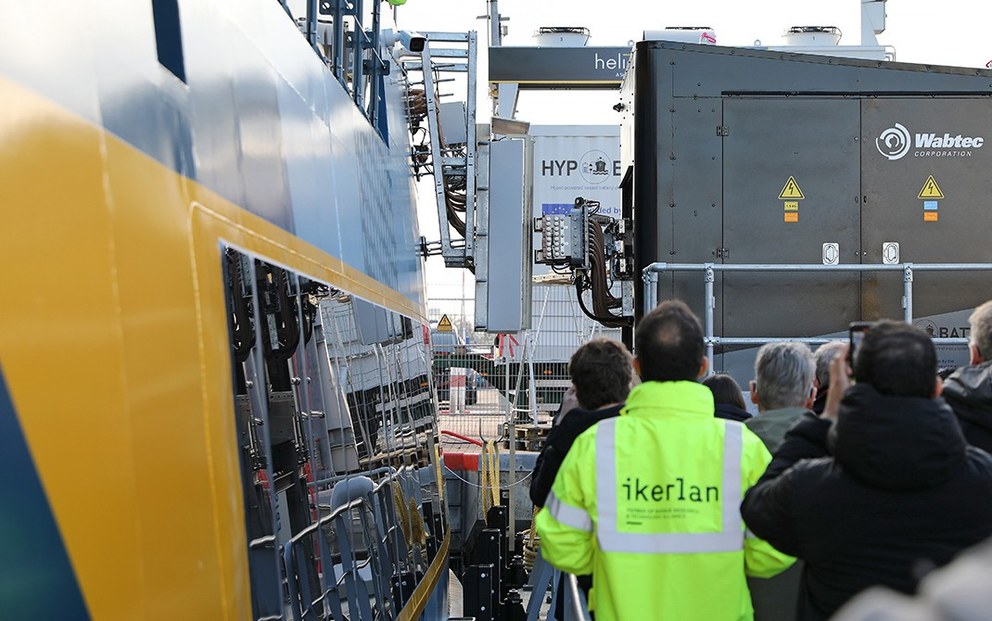
The Basque technology centre Ikerlan has led the European HYPOBATT project, aimed at accelerating the electrification of maritime transport and reducing its emissions through the development of very high-power charging systems for electric vessels in port environments.
The solution, validated under real-world conditions in Germany, incorporates a charger with a capacity of up to 2 MW and enables the connection between the vessel and the charging system to be established automatically in under 30 seconds.
The technology developed in the project was validated at the German port of Norddeich through a real-world demonstration of electric charging for vessels. During the tests, the system enabled the connection between the vessel and the port infrastructure to be automated and charging to begin in under 30 seconds, using a power of up to 2 MW, equivalent to the simultaneous consumption of more than 400 households.
Currently, port charging connections can take several minutes and, in many cases, require manual intervention, which limits operational efficiency and increases turnaround times.
This therefore represents a key technological milestone for the decarbonisation of maritime transport, which moves around 80% of global trade and accounts for approximately 3% of global CO₂ emissions —a figure which, according to the International Maritime Organization (IMO), could increase significantly in the coming decades if no measures are adopted.
“The electrification of vessels is one of the most promising ways to reverse this trend, but without powerful and standardised charging infrastructure in ports, no transition is possible”, explains Endika Bilbao Muruaga, researcher in the electromagnetism and control of converters team and HYPOBATT project lead at Ikerlan.
As well as leading the consortium, Ikerlan has contributed two key technologies to the project: the development of a digital twin of the power converter that performs the charging —enables the system’s operation to be simulated and optimised before and during use— and the integration of real-time cloud-based charging algorithms, which improve the efficiency and robustness of the charging process.
The system developed in HYPOBATT is designed to scale from 1 to 5 MW depending on port requirements and vessel type, incorporating adaptive energy management strategies that minimise battery ageing while enabling high power delivery without compromising port electrical infrastructure integrity.
The result is an estimated reduction of up to 20% in operating and maintenance costs for electric fleet operators, alongside a significant decrease in vessel turnaround times in port —one of the main factors currently hindering the commercial adoption of electric shipping.
The results of the trial confirmed the technical feasibility of the solution and its potential to facilitate the deployment of ultra-fast charging systems in European ports. Furthermore, the project has contributed to the development of future international standards for maritime electric charging systems, a key aspect in accelerating the electrification of maritime transport and advancing towards the decarbonisation targets set by the IMO for 2050.
This breakthrough brings Europe closer to a network of electrified ports and positions the technology industry as a key player in the maritime energy transition.
The project, which was recently completed, brought together 18 partners from 10 European countries and has received funding of €9.35 million from the HORIZON EUROPE programme.
About the HYPOBATT project
HYPOBATT is a European pilot project funded with €9.35 million by the European Union’s Horizon Europe programme, with a duration of 46 months. The consortium behind it brings together 18 organisations from 10 European countries with complementary profiles, including technology centres, companies from the maritime sector, technology providers, port authorities, universities, and certification and standardisation bodies.
Technology and Innovation for the improvement of the competitiveness of the Services Sector
+ related news


