



Most read
- 1. LKS Next is set to exceed 85 million in 2025 following 15 per cent growth, and is forecast to grow by 19 per cent in 2026
- 2. LANA and ETORKI cooperatives have joined together
- 3. Erreka Medical acquires Microliquid to expand in the healthcare sector
- 4. Laboral Kutxa among Spain’s top five banks
- 5. dBot positions Danobat as an international benchmark in next-generation industrial robotics
- 6. Barcelona Circular, new project that strengthens MONDRAGON's roots in Catalonia
Batz drives sustainable automotive manufacturing with recycled materials for high-performance components
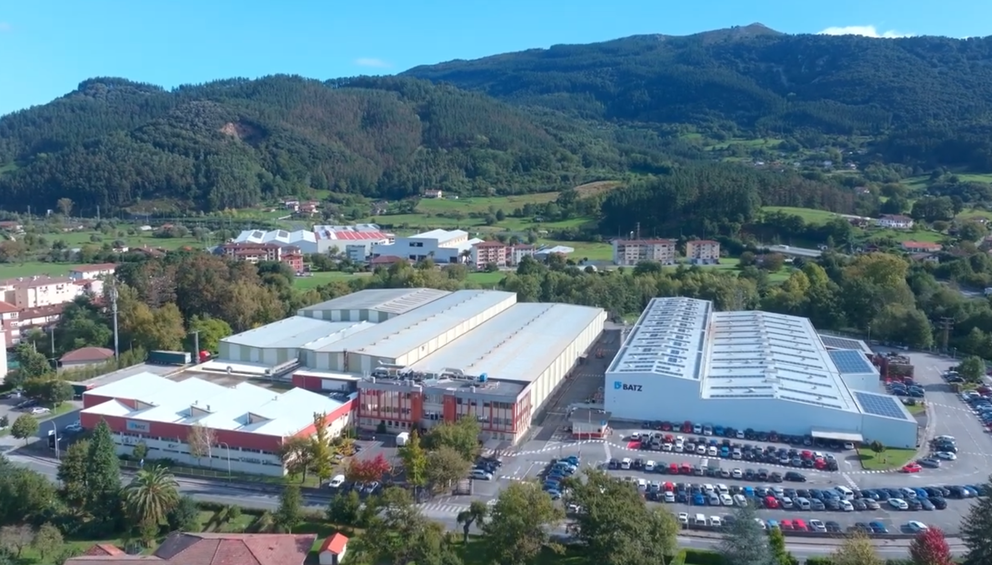
The Batz cooperative has taken another step towards a more sustainable industry through the MIDAS project, a research and development initiative that will make it possible to manufacture automotive components designed for safety-critical applications using recycled materials. The project marks a significant step forward in advancing the circular economy in a sector that demands the highest levels of quality, reliability and safety.
Specialising in the manufacture of lightweight structural components for the automotive industry, Batz identified growing market demand several years ago for the incorporation of sustainability criteria into these products. The challenge was to demonstrate that recycled materials could deliver the same mechanical and functional performance as conventional raw materials, even in structurally critical applications.
The MIDAS project represents a significant step towards the circular economy in the automotive sector, where high standards of quality, reliability and safety are essential.
The MIDAS project represents a significant step towards the circular economy in the automotive sector, where high standards of quality, reliability and safety are essential.
To address this challenge, the cooperative has led the MIDAS project, which has received support from the Hazitek programme, promoted by the Basque Government in collaboration with SPRI and co-financed by the European Regional Development Fund (ERDF). This support has helped accelerate an initiative with the potential to transform the use of recycled materials in components subject to demanding technical requirements.
A collaborative innovation network
The project has been developed through an extensive collaborative ecosystem involving other companies within the Corporation, including Cikautxo, Maier, Ikerlan and Leartiker, as well as companies such as IK Ingeniería, Samoving, Tecnalia and Cidetec.
Through this collaboration, different formulations of recycled materials have been investigated, assessing aspects such as material origin, mechanical properties and carbon footprint. The results demonstrate that it is possible to move towards more sustainable production models without compromising the safety or performance standards required by the automotive industry.
Batz's experience is an example of how innovation and collaboration can become drivers of competitiveness for MONDRAGON cooperatives.
Batz strengthens its position in the aerospace sector
Batz's growing diversification into high-value-added sectors such as aerospace was highlighted at the recent ITP Aero Supplier Forum, held yesterday at the Zamudio Technology Park. The event brought together ITP Aero's management team and its leading suppliers to discuss the company's business strategy, market developments and future outlook.
As a strategic partner of ITP Aero, Batz Aero was represented by Arman Ozerinjauregi, Aero Director; Luis Urkidi, WEC Manager; and Carlos Orueta, CEO of Batz Group. The latter also took part in a roundtable discussion alongside RDT CEO Benjamín Rosende and Gaztea Laiseka, ITP Aero's Head of Supply Chain for Fabrications, Machining and Subcontracting. The discussion focused on the key factors underpinning customer-supplier collaboration and future development opportunities.
The event concluded with a visit to several ITP Aero production facilities, providing first-hand insight into the challenges and requirements of one of the leading companies in the aerospace industry.

About Batz
Founded in 1963, Batz employs nearly 700 people at its headquarters in Igorre and more than 1,300 across the group as a whole. In addition to its presence in the Basque Country, the company operates production plants in countries including the Czech Republic, Mexico and China, serving automotive manufacturers worldwide.
+ related news


